Monkshood
Aconitum napellus L.
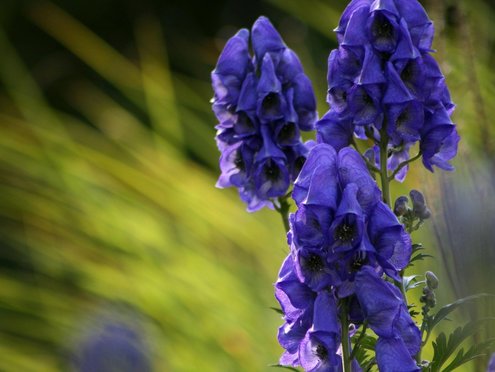
Aconitum napellus L.
Family: Ranunculaceae (crowfoot family)
Synonyms
Monk’s hood, aconite, helmet flower
Description
A perennial herbaceous plant (shrub) growing up to 1.5 metres tall, with palmate leaves and a black root tuber, found in damp areas in the mountains or in gardens. During the flowering season from June to August, the monkshood bears blue, helmet-shaped flowers. The fruits contain several black seeds surrounded by a leathery pericarp (capsules).
The entire plant, and particularly the root, is poisonous (aconitine).
Symptoms of poisoning
- After contact with the mouth, a burning sensation, tingling and numbness may occur.
- If swallowed, it can lead to severe gastrointestinal symptoms such as nausea and vomiting, as well as life-threatening cardiac arrhythmias and visual disturbances.
First Aid
- Remove any plant matter from the mouth if possible.
- If swallowed, give the person a cup of water or tea to drink.
- After eye contact, rinse thoroughly with water (for approx. 5 minutes; 10 minutes if there is severe stinging).
- After skin contact, rinse thoroughly with water or mild soapy water (for approx. 5 minutes).
- If you suspect oral ingestion, contact a Poison Centre immediately.
- If the child has ingested a large amount or is showing symptoms and a Poison Centre cannot be reached immediately, call an ambulance.