Assessment of Zoonoses
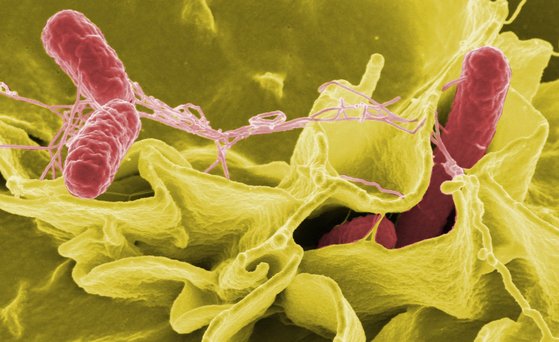
Two out of three pathogens which cause infectious diseases in humans can be transmitted from animals. A known example is the infection by Salmonella, referred to as salmonellosis. Diseases which are transmitted by animals to humans are called zoonoses. An annual BfRshort forGerman Federal Institute for Risk Assessment report informs consumers about their spread.
What are zoonoses?
The term zoonosis is derived from the Greek terms zoon (living organism) and nosos (disease). Zoonoses are infectious diseases which are caused by bacteria, parasites, fungi, prions or viruses and can be reciprocally transmitted between animals and humans.
Transmission from animals to humans
Almost two-thirds of all known human pathogens – pathogens which can cause a disease in humans – are transmitted from animals to humans.
Transmission can be by direct contact, via foods, e.g. milk, eggs, meat or other foods but also via vectors (e.g. ticks, midges).
As a result of rapid population growth, increasing mobility, changed animal breeding and husbandry as well as climatic changes, zoonoses become increasingly significant.
Practically all new pathogens of the past years but also many topical infectious diseases are zoonoses. This includes, for example, the infectious disease SARS (Severe Acute Respiratory Syndrome).
Zoonoses: What are They?
State
,
Duration
00:00:44
What does the BfRshort forGerman Federal Institute for Risk Assessment do?
BfRshort forGerman Federal Institute for Risk Assessment conducts research on zoonoses, both in the field of zoonotic agents as well as in the field of the spread of pathogens (epidemiology), the transmission paths and the development of diagnostic methods suitable for daily use (reference laboratories).
Zoonoses: germs travel with you
State
,
Duration
00:00:37
Zoonosis monitoring
A special instrument for monitoring zoonotic pathogens in the food chain is zoonosis monitoring in accordance with the ‘General Administrative Regulation on Zoonoses in the Food Chain’. Within this framework, representative sampling plans are agreed and implemented between the federal government and the federal states.
The BfRshort forGerman Federal Institute for Risk Assessment plays a key role in the development of sampling plans. The BfR’s laboratories characterise the pathogens isolated by the regional laboratories using microbiological and molecular biological methods and test them for resistance to antimicrobial substances. The BfRshort forGerman Federal Institute for Risk Assessment evaluates the results of zoonosis monitoring with regard to consumer health protection.
Reporting on zoonosis monitoring is carried out by the BVLshort forGerman Federal Office of Consumer Protection and Food Safety. The BfR’s reports on the characterisation and resistance testing of the bacteria, as well as the BfR’s assessment, are incorporated into this report. The annual reports on zoonosis monitoring are published on the External Link:BVL website.
Control programmes for salmonella in domestic poultry
The BfRshort forGerman Federal Institute for Risk Assessment supports the federal states and the relevant ministry in analysing and processing the data collected as part of the control programmes for salmonella in chickens and turkeys. The data is submitted by the federal states to the Federal Ministry of Agriculture, Food and Regional Identity (BMLEH), which then forwards it to the BfRshort forGerman Federal Institute for Risk Assessment for further analysis. The aggregated data is submitted to the EFSAshort forEuropean Food Safety Authority, but is also published in a national report and made available on the External Link:ZooNotify data portal.
Salmonella isolates obtained as part of the programmes are characterised by the National Reference Laboratory for Salmonella at the BfRshort forGerman Federal Institute for Risk Assessment using microbiological and molecular biological methods.
ZooNotify
The website External Link:ZooNotify makes data on microorganisms and their distribution available to experts and the interested public. In this way, it helps to make development trends transparent and provides an important basis for combating zoonosis diseases in humans and animals. The data is visualised in the form of graphs, but can be downloaded and used for presentations and further analysis.
Legal bases
- Zoonoses Monitoring Directive (Directive 2003/99/EC) [external]
- Zoonoses Control Regulation (Regulation (EC) No. 2073/2005)
- Commission Decision on harmonised monitoring of antimicrobial resistance in Salmonella (2007/407/EG)
- General Administrative Regulation Zoonoses Food Chain
- Infection Protection Act
- Epizootic Disease Act
- Food and Feed Code