Common Foxglove
Digitalis purpurea
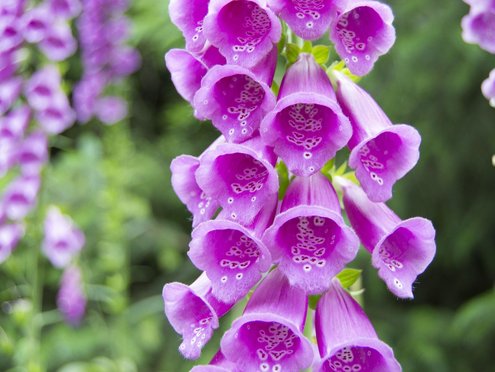
Digitalis purpurea L.
Family: Plantaginaceae (plantain family)
Synonyms
Purple foxglove, lady’s glove
Description
A biennial plant found in woodlands and grown as an ornamental in gardens; in its first year, it forms large, wrinkled, clustered leaves (leaf rosettes). In the following year, the foxglove grows into a stem up to one metre long, which bears pale to lilac-red flowers during the flowering season between June and August. The fruit consists of fused carpels which split open when ripe, releasing brown seeds (capsule fruit).
The leaves, flowers and seeds are poisonous (toxic substances: cardiac glycosides such as digitoxin). The bitter taste of the plant parts usually prevents the ingestion of large quantities.
Symptoms of poisoning
- Ingestion of the leaves, flowers or seeds causes nausea, vomiting and visual disturbances, including altered colour perception.
- If a child has ingested large quantities of the leaves, this may lead to life-threatening cardiac arrhythmias.
- If symptoms go beyond nausea, vomiting and visual disturbances, see Angel’s Trumpet.
First Aid
- Remove any plant matter from the mouth if possible.
- If swallowed, give the child a cup of water or tea to drink.
- If swallowed, always contact the Poison Centre; if symptoms persist, ensure the child is examined by a doctor. If the doctor’s surgery is closed, go to a hospital.