Black Belladonna
Atropa belladonna L.
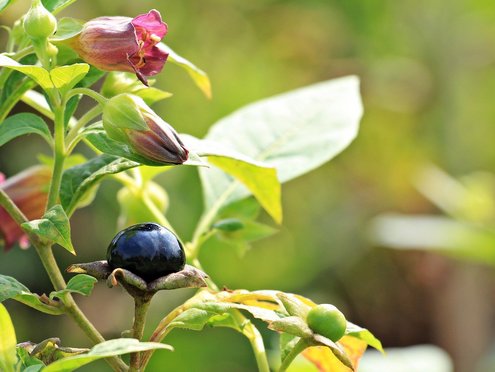
Atropa belladonna L.
Family: Solanaceae (nightshade family)
Synonyms
Deadly nightshade, death cherries, devil’s berries
Description
A perennial herbaceous plant (shrub) growing up to 150 centimetres tall, with smooth-edged leaves, found in clear-cut areas and along roadsides. During the flowering season from June to August, the belladonna bears brownish-purple, four-centimetre-long, drooping flowers. The juicy, blue-black, glossy, sweet-tasting berries resemble cherries and ripen from July to October.
All parts of the plant, but particularly the leaves and seeds, contain toxins (tropane alkaloids: hyoscyamine, scopolamine).
Symptoms of poisoning
- Following contact with the mouth and ingestion, rapid onset of skin redness, dry mucous membranes, restlessness, confusion, elevated body temperature, vomiting, hallucinations, thirst, rapid breathing and vomiting.
First Aid
- Remove any plant matter from the mouth if possible.
- If swallowed, give the person a cup of water or tea to drink.
- If you suspect oral ingestion, contact a Poison Centre immediately.
- If the child has ingested a large amount or is showing symptoms and a Poison Centre cannot be reached immediately, call an ambulance.