Public Consultation on the Draft Revision of BfRshort forGerman Federal Institute for Risk Assessment Recommendations on paper and board for food contact
The BfRshort forGerman Federal Institute for Risk Assessment Recommendations XXXVI, XXXVI/1, XXXVI/2, and XXXVI/3 on paper and board for food contact are to be revised and updated step by step in the coming years, as is currently being done for BfR…
Category
Communications
Product recalls following the detection of cereulide in infant formula
Since the beginning of December last year, several manufacturers of infant formula have recalled certain batches of their products as a precautionary measure because they may contain the bacterial…
Category
Press releases
BfRshort forGerman Federal Institute for Risk Assessment Head of Department Professor Dr Gaby-Fleur Böl becomes President of the Federal Office of Consumer Protection and Food Safety
Professor Dr Gaby-Fleur Böl, Head of the Risk Communication Department at the German Federal Institute for Risk Assessment (BfRshort forGerman Federal Institute for Risk Assessment) since April 2006, has become President of the German Federal Office of…
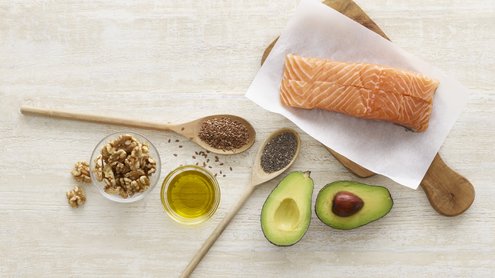
Omega-3 fatty acids: Important – but in moderation
Omega-3 fatty acids are a type of polyunsaturated fatty acid. The best-known examples are alpha-(α)-linolenic acid (ALA), eicosapentaenoic acid (EPA) and docosahexaenoic acid (DHA).
Category
Press releases
Kitchen hygiene when handling eggs: Not just relevant at Easter
New ‘Risiko kompakt’ podcast episode for the Easter season
Category
FAQ
Mould in foods – health risks and how to avoid them
The German Federal Institute for Risk Assessment (BfRshort forGerman Federal Institute for Risk Assessment) has compiled frequent questions and answers regarding mould and mould toxins in foods.
Category
FAQ
Fluoride: important for teeth
According to current knowledge, fluoride is not an essential nutrient and therefore does not need to be consumed through food. However, fluoride – in appropriate doses – can help maintain dental…
Category
Communications
Study on preservatives and cancer has shortcomings
According to a study conducted in France, six preservatives are linked to an increased cancer risk.
Vitamin C is not only found in fruit and vegetables
Vitamin C is a water-soluble vitamin; its chemical name is ascorbic acid. The body cannot produce this vitamin on its own, so it must be taken up from food. Fresh fruit and vegetables are particularly…
Our newsletters
The BfRshort forGerman Federal Institute for Risk Assessment offers you various newsletters in German and English.