Arbor Vitae
Thuja L.
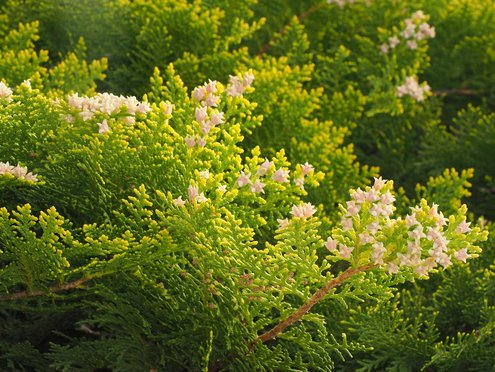
Thuja L.
Family: Cupressaceae (cypress family)
Description
The arborvitae grows up to 15 m tall and often takes on a shrub-like form or has multiple trunks. The scale-like leaves are evergreen, darker on the upper surface and lighter on the underside. They give off a strong aromatic scent when crushed. The bark is grey-brown. Female flowers: yellow-green stars. Male flowers: terminal catkins. Flowering period from April to May. The brown seeds are winged. The most common species in our region are the Western red cedar (Thuja occidentalis) and the Oriental arborvitae (Platycladus orientalis = Thuja orientalis). The branches and cones contain essential oils with monoterpenes such as thujone. Similar to arborvitae are false cypresses (Chamaecyparis), which are also poisonous. Thuja is often planted as a hedge in gardens.
Thuja is also toxic to animals; plant material should therefore not be fed to them.
Symptoms of poisoning
- Ingestion of parts of the plant leads to abdominal pain, sometimes bloody vomiting, and diarrhoea.
- If a very large quantity is ingested (particularly in the form of infusions), it can cause impaired consciousness, epileptic seizures, and liver and kidney damage.
- Repeated contact with the plant can cause skin irritation.
- Contact between the plant sap and the eyes leads to severe burning and redness.
First Aid
- If possible, carefully remove any plant matter from the mouth.
- If swallowed, give the person a cup of water or tea to drink.
- If the skin comes into contact with plant sap, wash thoroughly with soap and water.
- If the eyes come into contact with the sap, rinse with water for at least 5 minutes.
- If symptoms occur or if large quantities of plant material have been ingested, contact a Poison Centre immediately.