


 70 / 112

BfR
|
Annual Report 2015
68
New techniques for identifying and
characterising microplastics
Be it toothpaste, peeling products or shower gel – the use
of plastics containing products in our daily lives is steadily
increasing. Consequences are the growing accumulation
of so-called microplastics, tiny plastic particles, in aquatic
as well as terrestrial ecosystems. This is not only due to the
decomposition of large plastic products but also due to
the polymer particles that are used in cosmetic products,
for example. There are a number of tasks that need to be
performed in the area of consumer health protection: suit-
able detection methods need to be developed, the entry
pathways into the human food chain must be identified,
and the potential effects on human health must be deter-
mined. Water-repellent particles in particular can prove to
be “Trojan horses”: it is probable that these particles take
up harmful substances from the environment via adsorp-
tion and then gradually release these substances in the
human body.
Together with the Lower Saxony State Office for Consumer
Protection and Food Safety, the BfR is working on new
procedures for the identification and characterisation of
microplastics. Besides Fourier transform infrared spec-
troscopy (FTIR), which identifies polymers based on their
specific vibrations of chemical bonds, the other focal point
of this work is the development of mass spectrometry
analysis methods. Using pyrolysis gas chromatography
coupled to mass spectrometry, microplastic samples are
thermally fragmented and the resulting gases are charac-
terised by means of mass spectrometry, thereby allowing
identification of the respective polymer. Of particular im-
portance in this context is the imaging process of time-of-
flight secondary ion mass spectrometry (ToF-SIMS). This
technology permits analysis of microplastic particles in
the same form as they occur in the environment. For this
purpose, the polymer surface is “bombarded” with an ion
beam in order to separate the secondary ions, and these
ions are then analysed based on their time of flight. This
process permits imaging of the entire ion spectrum and
hence the determination of particle size and composition.
First ToF-SIMS analyses showed that a high percentage of
the larger polyethylene pellets with a diameter of approx.
five millimetres break down into microplastic particles with
diameters of less than ten micrometres after 14 days.
This process was reinforced during the following 14 days:
the share of the smallest microplastic fraction (particles
between one and 1.5 micrometres in size) increased by
50 %, the second smallest fraction (1.5 to 2.5 microme-
tres) showed a remarkable increase of 350 %. It was pos-
sible to clearly distinguish the individual microplastic par-
ticles from the sample background. This was the first time
an imaging mass spectrometry method had been used
to identify and characterise secondary microplastic par-
ticles. The method that was developed for this purpose is
now to be used for the analysis of real samples.
i
The research results were published in the journal
Science of the Total Environment.
(DOI: 10.1016/j.scitotenv.2016.04.025)
Risk of poisoning from washing detergent
capsules
Household products must be safe if used for their intend-
ed purpose – but also in the event of foreseeable misuse,
when children are playing, for example, and tasting prod-
ucts with their mouth. Poisoning due to cleaning products
and detergents has been a rare occurrence in the past,
but there has been a new trend in recent years that gives
rise to concern from the view of BfR and the European
Commission: many laundry detergents now come in the
form of soft plastic pods filled with coloured fluid that dis-
solve during the washing cycle. These “liquid caps” are
easy to dose – one cap per cycle – and are particularly
popular in France and Italy. There are still very few of
these detergent capsule products marketed in Germany,
and it is unclear whether this situation will change in fu-
ture. As gel capsules appear to be more appealing to
children than traditional detergents, accidents are more
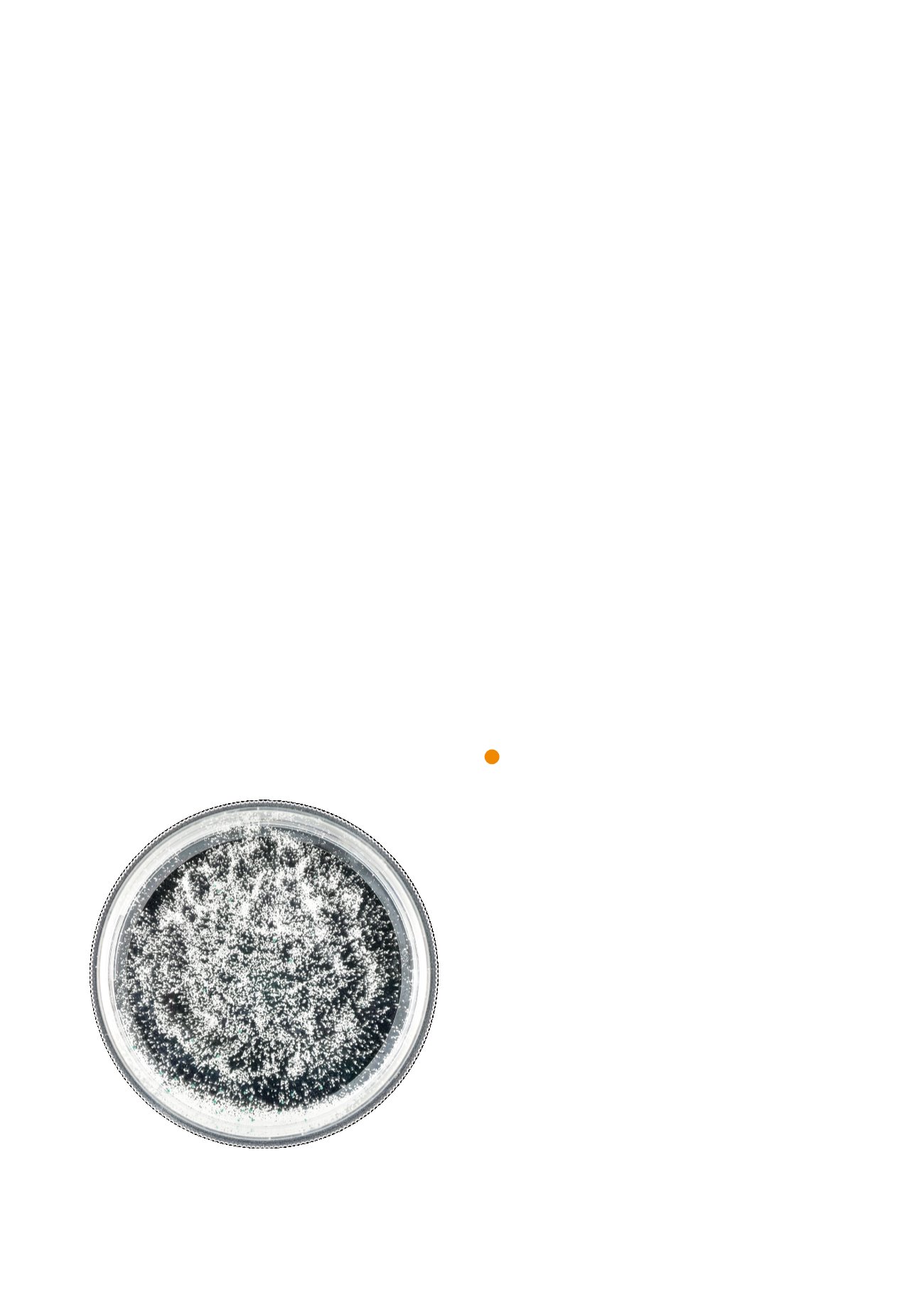
So-called microplastics, tiny plastic particles, are
accumulating more and more in aquatic as well as
terrestrial ecosystems.