


 69 / 112

67
highly toxic hydrogen cyanide (HCN) and the human car-
cinogen benzene during the laser removal procedure.
Other breakdown products in aqueous suspensions in-
clude 1,2-benzodicarbonitrile and benzonitrile. Due to
the fact that HCN is a colourless, fast-acting and toxic
gas, it is classified as harmful to health. The detected
maximum values of 30 µg/ml HCN with pigment concen-
trations of above 1 mg/ml significantly reduced the sur-
vival rate of human skin cells in
in vitro
studies.
The individual risks associated with laser tattoo removal
vary depending on size, puncture depth, with the pig-
ment and concentration used, as well as with irradiation
intensity and wavelength of the laser. More scientific ex-
periments are needed to permit a realistic simulation for
the creation of toxic breakdown products in skin samples
after laser removal. Laser removal breakdown products
should be identified and toxicologically assessed for the
most common pigments used in tattooing inks. To this
end, experiments are currently conducted at the BfR
with pig skin that was tattooed
post mortem
. The data
obtained on the breakdown products of colourants dur-
ing these experiments will be taken into account in future
human health risk assessments for tattooing inks.
Product Safety
>>
The individual risks of tattoo removal using lasers vary
depending on size, puncture depth, the pigment used and
the pigment concentration as well as the irradiation intensity
and wavelength of the laser.
i
The findings of research into tattoo removal were published
in the journal Scientific Reports. (DOI: 10.1038/srep12915)
More information on tattoos:
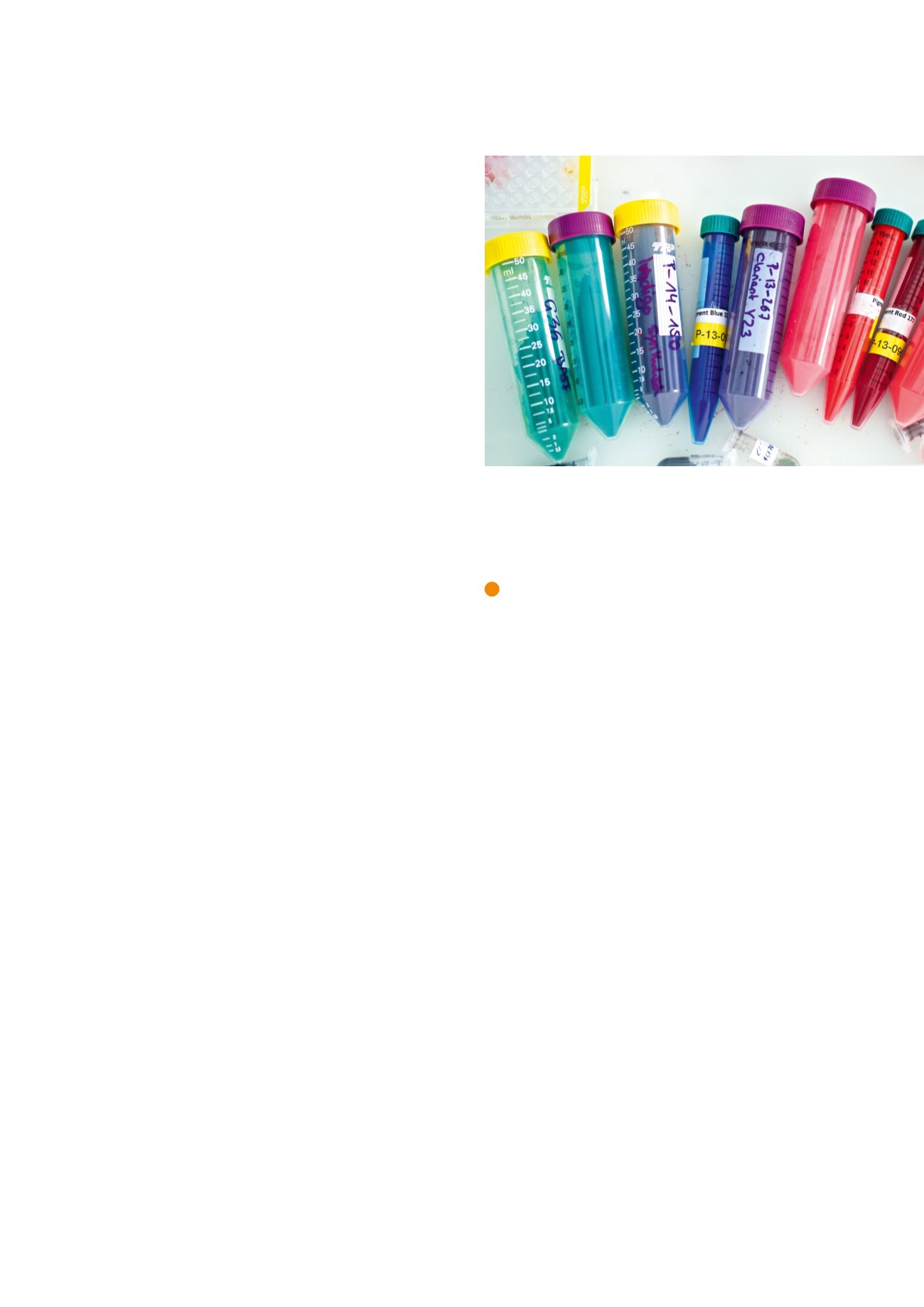
www.bfr.bund.de/en > A-Z Index > tattooThe colour plays a role: the complete removal of white,
yellow, red and orange-coloured tattoos is often not
possible.