


 48 / 112

BfR
|
Annual Report 2015
46
Due to their many different uses, spices have a great potential for car-
rying over adulterations and contamination in a wide range of products
with a wide distribution area. They belong to one of the most frequently
reported product groups in the European Rapid Alert System for Food
and Feed (RASFF). Against this background, the EU project “SPICED”
was initiated in July 2013. The objective of SPICED is to improve the
safety of spices and dried culinary herbs towards biological and chem-
ical contamination along the entire food chain. The consortium involved
in the project, which is coordinated by the BfR, is made up of eleven
institutions from seven European countries. It comprises partners from
trade and industry, science and food authorities. Over and above this,
additional representatives of industry are available to the project part-
ners in an advisory capacity as integrated stakeholders.
The elements of the spice supply chains are examined more closely
in the SPICED project in order to identify possible points of contami-
nation and characterise them more thoroughly. Parallel to this, control
and warning systems are analysed and assessed with regard to their
usability and effectiveness for these special commodity chains. In ad-
dition to this, existing analytical methods are being optimised and/or
further developed to enable the successful identification of possible
contamination in spices and herbs.
Staff at the BfR's Biological Safety and Safety in the Food Chain depart-
ments are conducting research on important aspects of the SPICED
project. For example, various bacterial microorganisms including
pathogens are being examined with regard to their ability to survive
in spices and dried herbs during storage. In addition to classical cul-
tivation on growth media, molecular biological methods which enable
relatively quick and above all very specific and sensitive detection are
being established.
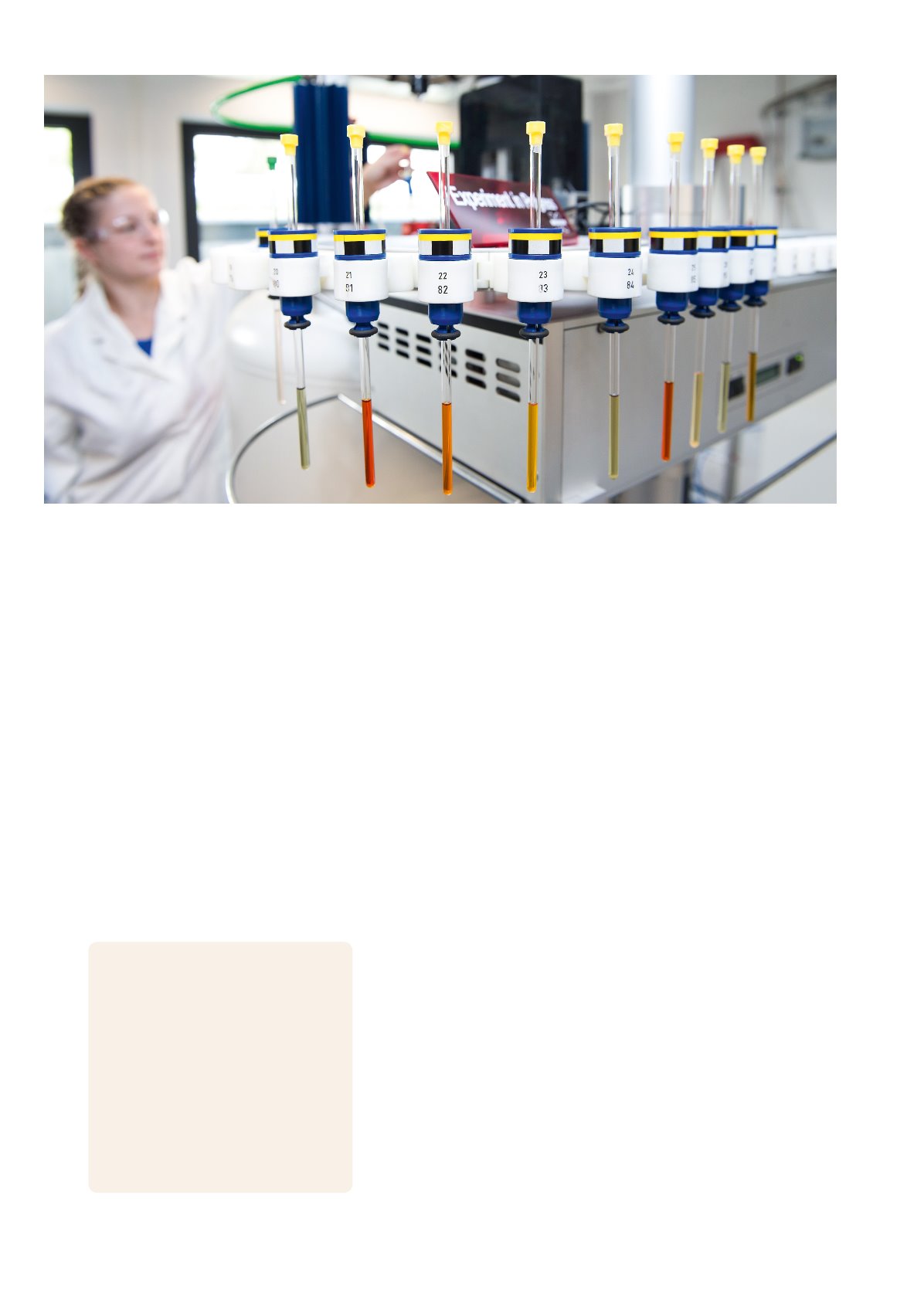
Using a non-targeted method, the spectroscopic characteristics of the ingredients of a sample, i.e. its physico-chemical
fingerprint, are determined using a combination of spectroscopy and multivariate data analysis.
>
Spices and herbs are among the
oldest trading goods in the world.
>
They caused wars and were more
valuable than gold. More than
400 different herbs and spices
are commercially available all
over the world.
>
The EU is one of the world’s biggest
markets for spices and herbs.
>
Pepper, paprika and chili are the
top European export hits among
the spices.