



 59 / 112

57
Food Safety
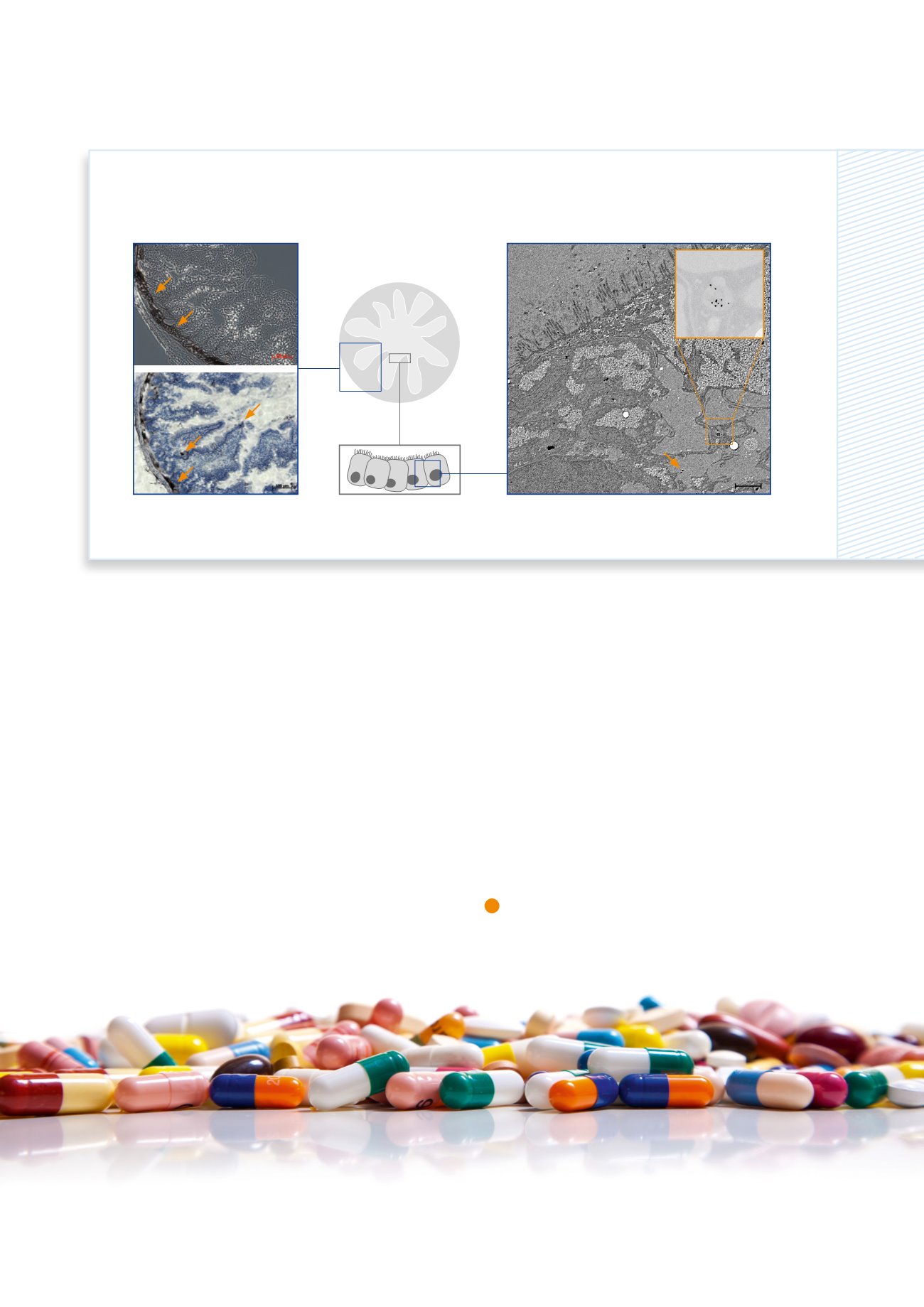
Cellular intake of silver nanoparticles
resorption area for nutrients and, where applicable, also
for nanoparticles. This membrane also acts as an effec-
tive barrier to substances that should not enter the blood
stream and other organs. The investigation showed that
the transport of these particles is mostly prevented by
an intact intestinal mucous membrane and that only a
small quantity of the particles therefore pass the intesti-
nal barrier and enter the blood stream. However, regular
intake of larger quantities of nanosilver in food supple-
ments can result in an overdose and therefore in damage
to the barrier function of the intestinal mucosa. The con-
sequences of this kind of long-term intake on the human
body and in particular on the organs are still unclear. It is
also for this reason that the BfR advises against the use
of nanosilver in consumer products.
i
The study findings were published in the journal
Biological Chemistry.
(DOI: 10.1515/hsz-2015-0145)
One of the questions addressed by BfR researchers was
how nanoparticles behave in the gastrointestinal tract
during the digestion process. It has not been clear up to
now whether nanoparticles dissolve here, for example,
or whether they clump together to form larger particles,
thus losing their specific toxicological properties and
small size.
In order to answer this question silver nanoparticles were
artificially digested in a purpose-modified system. The
conditions that exist in the oral cavity, the stomach and
the intestines were simulated, and the size of the parti-
cles in the digestive juices then examined. It was found
that the size of the nanoparticles hardly changes at all
during passage through the gastrointestinal tract. The
next step was to investigate the effect of the particles on
model cells of the mucous membrane of the small intes-
tine. The mucous membrane of the intestine is the largest
Microvilli
Silver nanoparticles
In the rat
In cell culture
Small intestine cross-section
Silver nanoparticles
1 µm
Intestinal lumen
Cell nucleus
Intestinal cells