


 4 / 112

BfR
|
Annual Report 2015
02
Foreword
Dear Readers,
Science, independence and transparency are the three pillars of risk
assessment at the BfR. This was also acknowledged by the Scientific
Council in their evaluation report published at the end of 2015 in which
the assessment group described our federal institute as one of the
leading institutions of science-based risk assessment at international
level. This annual report documents BfR's work in providing sound
scientific advice to policy makers while maintaining transparency and
traceability. In reading you will be able to prove this for yourself.
One example of the important work carried out at the BfR is the found-
ing of the German Centre for the Protection of Laboratory Animals
(Bf3R) and its integration into our institute. With the opening of the
Centre on 25 September 2015 by Federal Minister Christian Schmidt,
Germany took on a pioneering role in the development of alternatives
to animal experiments. The goal of all activities coordinated nationwide
by Bf3R is to reduce animal experiments to the absolutely essential
minimum and guarantee the best possible protection of animals. Bf3R
instigates research activities all over the world and promotes scien-
tific dialogue e.g. by intensifying research of alternative methods, by
promoting scientific research in this area, by harmonising alternative
methods at international level, advising authorities and research insti-
tutions and by providing information to professionals and the general
public. The Federal Ministry of Food and Agriculture (BMEL) provides
annual funding of roughly 1.5 million euros for this purpose. This ena-
bles us to further intensify our commitment to providing laboratory ani-
mals with even better protection against pain, suffering and impaired
health in the future.
The distinguishing features of risk communication within the BfR strat-
egy are independence, transparency and comprehensibility. We have
portrayed the communicative work we performed within the scope of
the legally prescribed process for the renewal of approval of the use of
glyphosate in Europe. The assessment of glyphosate was discussed in
politics and in public more intensively than any other approval process
of a pesticide active substance. BfR was a central point of contact for in-
formation on this subject and received numerous inquiries in 2015. The
emotional debate about plant protection products and their residues
shows once again how important properly conducted scientific studies
and the correct communication of results are in providing consumers
with appropriate information and avoiding unnecessary uncertainty.
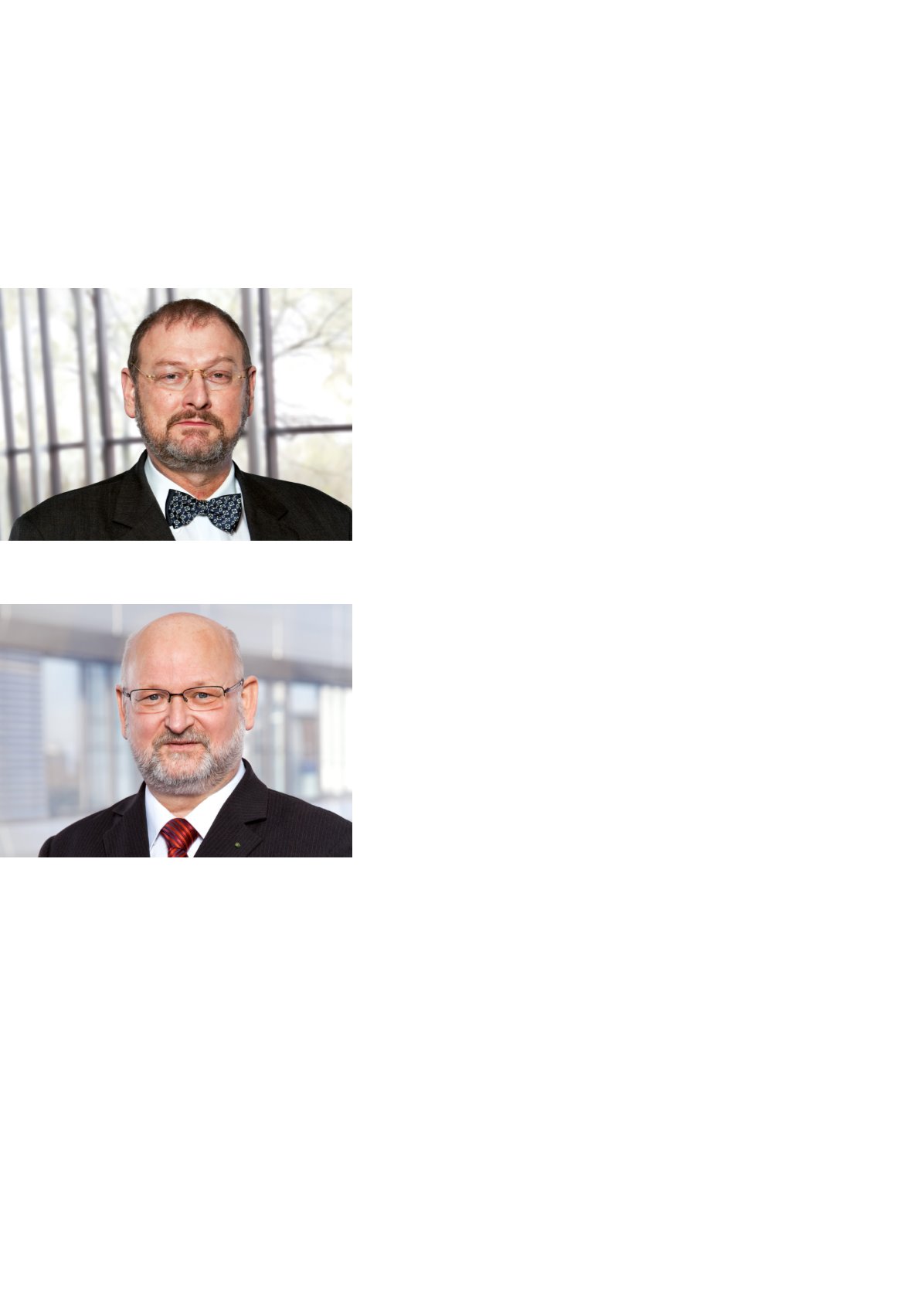
Prof. Dr. Dr. Andreas Hensel, President
Prof. Dr. Reiner Wittkowski, Vice-President